
The Glacier Recovery and the Race to Conceal It
Operation NapoleonThe long-hidden aircraft’s reappearance turns a decades-old secret into a frantic recovery operation whose growing visibility threatens the military’s control of the story.
increasing Bearing strength in each event
 decreasing
Bearing strength in each eventdecreasingA Plane Lost in the Storm
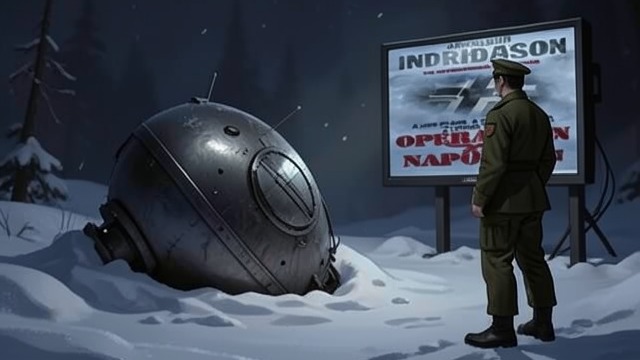
A Plane Lost in the Storm
The crash
A German transport aircraft crossed the storm-darkened sky above the farm near Höfn and vanished toward Vatnajökull Glacier. Two local brothers watched it fly too low to clear the ice, but they had no way to report the sighting until the weather eased.
The search begins
When Colonel Miller arrived with a large U.S. Army expedition, the brothers guided the soldiers onto the glacier. The search yielded only a wheel rim stamped with the maker’s name; the snow concealed the aircraft and its passengers. Miller took the fragment and imposed secrecy, giving the local men no reason to understand why the wreck mattered.
The failed search established the conflict’s central imbalance: the military possessed resources and authority, while the glacier kept the decisive evidence out of reach. The aircraft was not merely missing; it was a secret that could not be safely recovered until the ice gave it back.
The Secret Returns
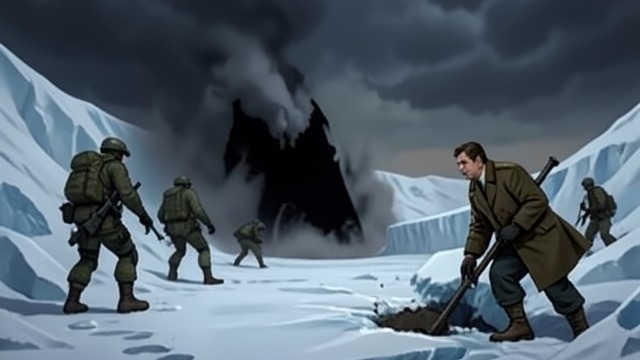
The Secret Returns
A mark in the ice
New satellite imagery showed a dark shape emerging from Vatnajökull. In Building 312, Vytautas Carr recognized the location and mobilized a covert recovery team before the discovery could attract public attention. His order to keep the images closely held made secrecy part of the operation from its first hour.
A new expedition
Ratoff arrived at Keflavík Airport with troops, tracked vehicles, and glacier equipment. The team travelled east under civilian cover, then established a camp and began digging. Jón recognized the pattern of a renewed search and understood that the Americans believed they had finally located the aircraft.
The glacier had transformed an old failure into an immediate crisis. The military could no longer rely on the ice to hide the plane indefinitely, so it attempted to remove the evidence before the Icelandic public or government could force an explanation.
The Wreck Reveals More Than Gold
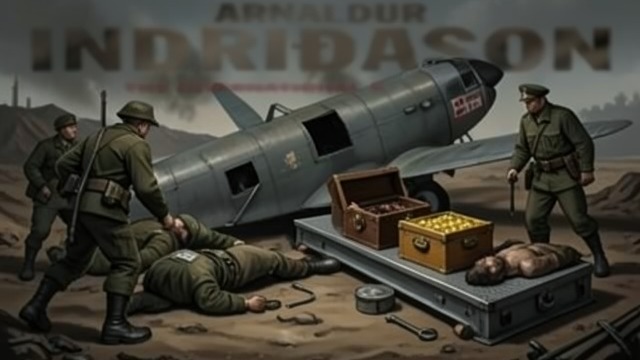
The Wreck Reveals More Than Gold
The aircraft exposed
As the excavation advanced, soldiers uncovered bodies and a German officer’s remains beside the fuselage. When the Junkers broke open, Ratoff found a two-star American general, an American pilot, several German passengers, two crates of gold, and a locked briefcase. The bodies and objects complicated the official account before anyone outside the operation could inspect them.
Documents change the stakes
Ratoff expected a vast treasure but found only a small quantity of gold. The documents in the briefcase, however, disclosed the existence of Operation Napoleon and a buried political secret. His discovery shifted the conflict from retrieval to control: the operation’s director now knew why his superiors feared exposure.
The aircraft was both evidence and a threat. Carr still wanted every paper delivered to him, while Ratoff had realized that obedience could make him expendable. The secret began to divide the recovery team from within even as its members tried to keep the wreck out of public view.
Airlift Under Public Pressure
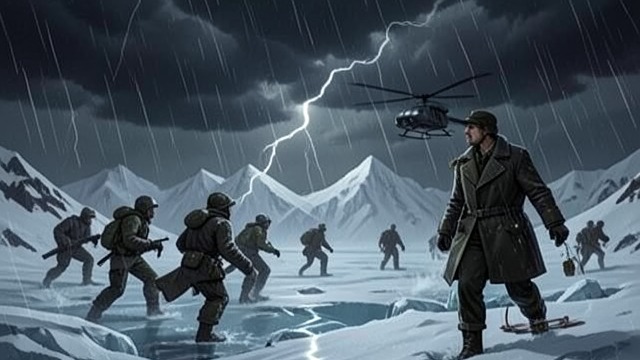
Airlift Under Public Pressure
The cover story weakens
The storm delayed the work, while reports of missing rescuers and armed troops made the operation harder to hide. Icelandic officials demanded answers, and air-traffic monitoring recorded the movement of American helicopters. Carr understood that the volcanic-alert pretext and the claim of routine exercises could not hold indefinitely.
Removing the evidence
Ratoff prepared the aircraft sections and bodies for helicopter transport to Keflavík Airport, intending to load them onto a C-17 transport plane. He treated the worsening publicity as a reason to accelerate the extraction. At the same time, Carr feared that each additional hour on the glacier increased the risk of discovery and political consequences.
The recovery operation had reached a critical contradiction: the military needed conspicuous aircraft and heavy equipment to remove the wreck, yet those very actions made secrecy less credible. The race against the weather had become a race against public scrutiny.
The Secret Leaves Iceland
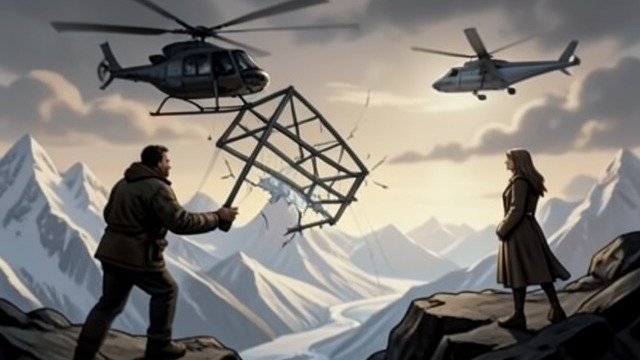
The Secret Leaves Iceland
The aircraft is airborne
The helicopters lifted the broken Junkers from the glacier and carried it to the waiting C-17. The operation’s most visible evidence was now moving away from Iceland, but the rescue team, the surviving witnesses, and the Icelandic news media had already complicated the claim that nothing unusual had happened.
Containment replaces concealment
On board, Carr took control of the documents and arranged to destroy the papers Ratoff had hidden. Ratoff’s attempt to bargain with his knowledge ended in a violent confrontation, while Kristín remained an unresolved witness whose survival threatened the mission’s final cover story. Carr relied on threats, sedation, and the expectation that authorities would doubt her account.
The aircraft’s departure did not resolve the conflict; it moved the struggle from the glacier to the transport plane and then into the aftermath. The recovery succeeded physically, but the military could only preserve its preferred version of events through further coercion and misinformation.
late January 1945
27–28 January, decades after the crash
30 January, during excavation
late on 30 January into 31 January
31 January, after midnight
